About:
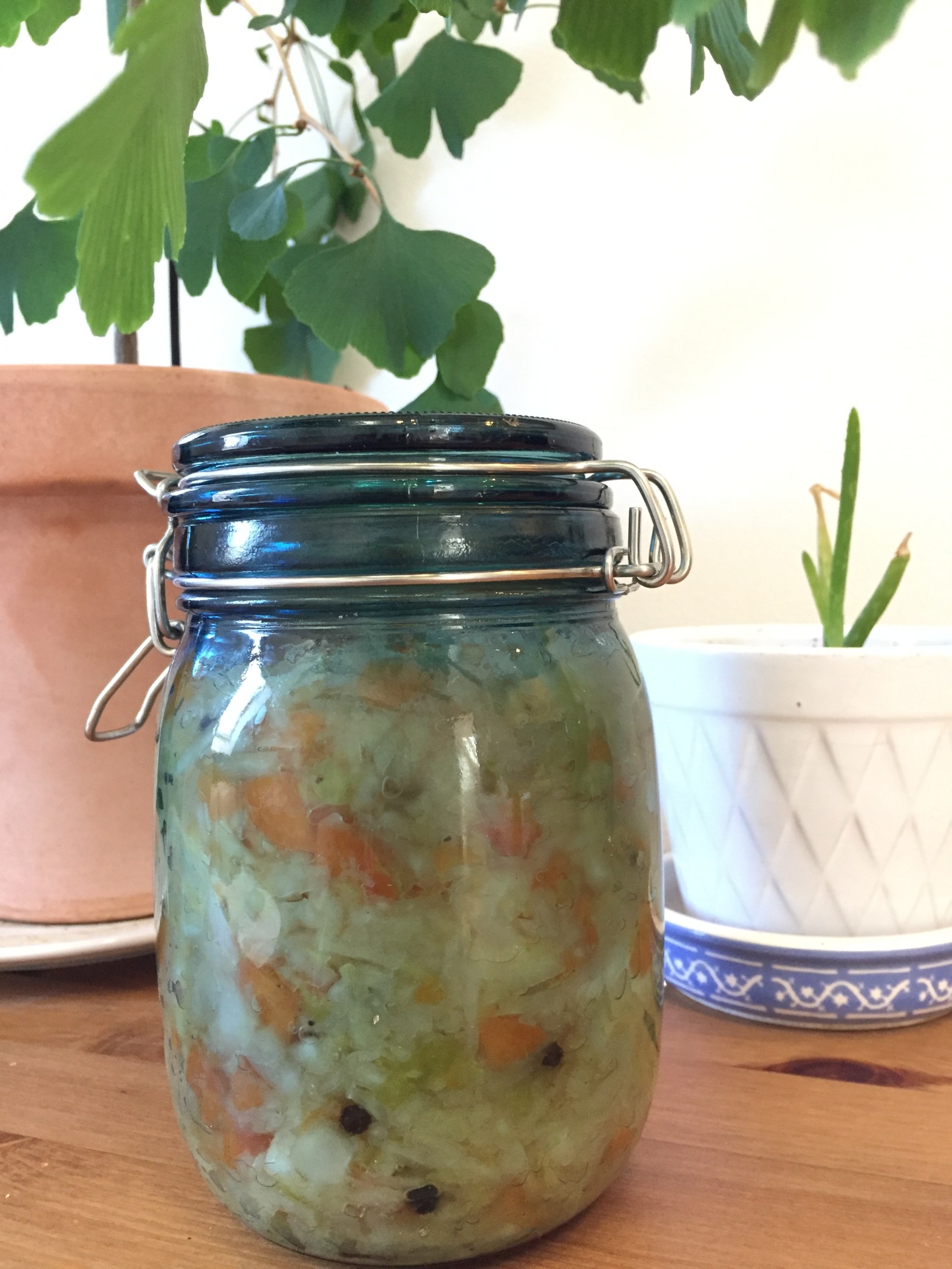
Sauerkraut is a german word meaning ‘sour herb’, it is made with cabbage and is perhaps the most well known type of vegetable ferment. Some say it was originally brought to Europe by the Mongol Emporer Ghenghis Khan. In it’s simplest form Sauerkraut is cabbage and salt. However there are many delicious variations, this being one of them! Another very tasty combination is with oregano and jalapeño or juniper berry and bay leaves. I love to eat this in a fishcake burger or in a warming vegetable soup.
Ingredients:
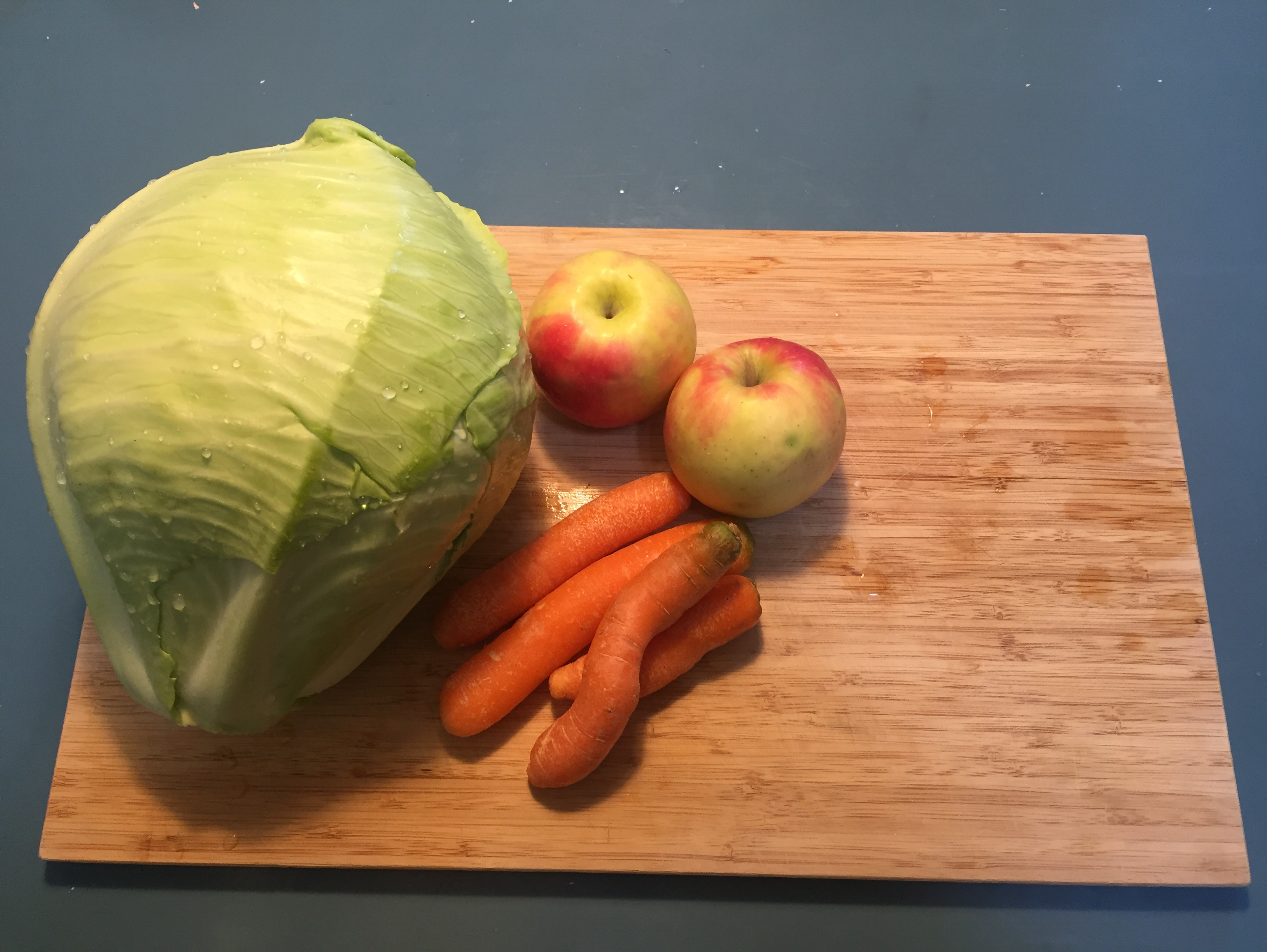
- Cabbage
- Carrot
- Apple
- Blackpeper corns
- Salt
Method:
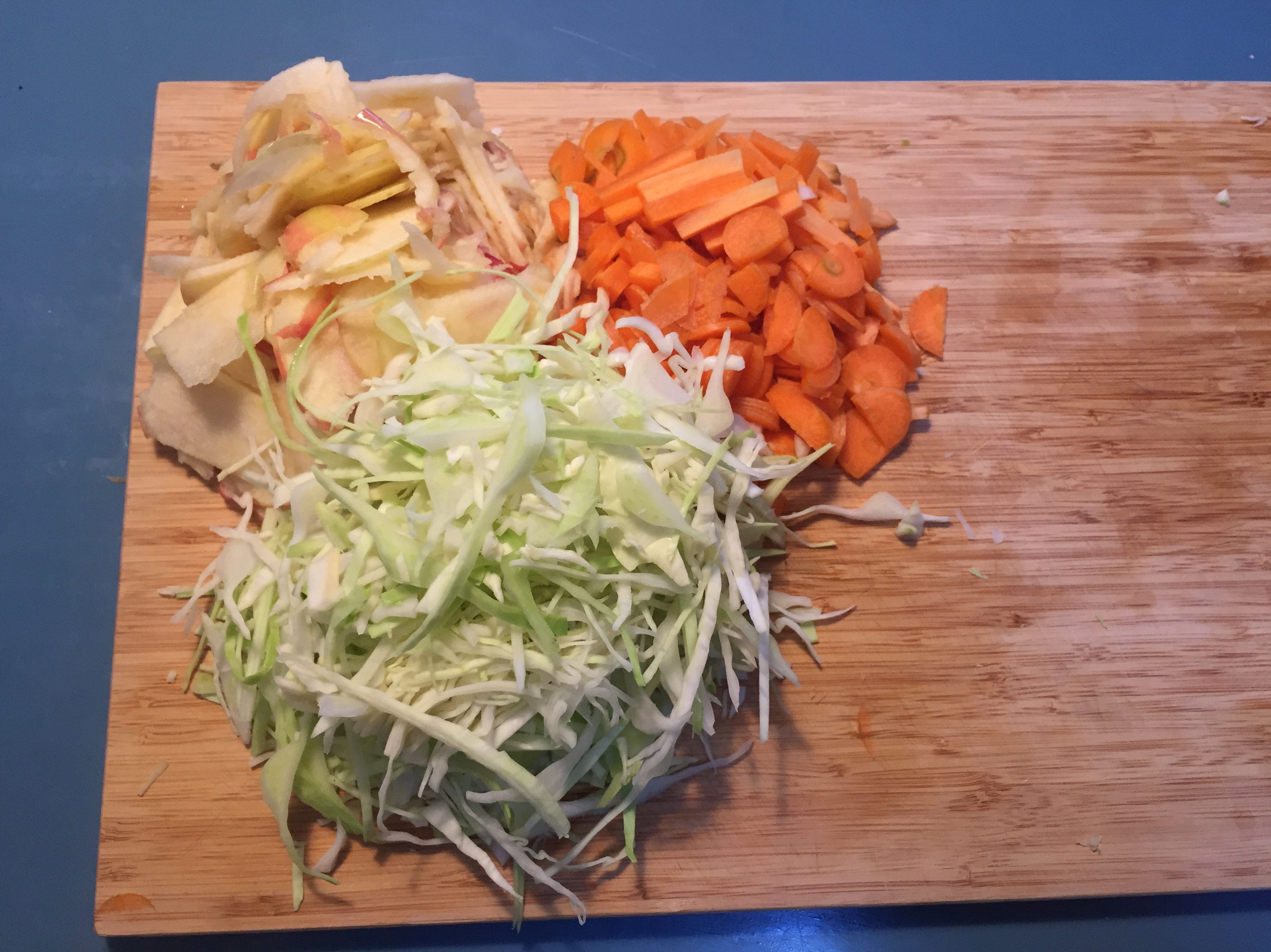
For this recipe I used half a cabbage, two apples and two large carrots. This enabled me to fill the two glass mason jars pictured above. To begin with I finely chop the cabbage. Personally I prefer the texture of the cabbage finely chopped but any size will do. Next chop the carrots into small pieces. There is no need to peel the carrots before hand as the carrot skin contains many wonderful lactic acid forming bacteria. I grated the apple using the slicing slots of a kitchen grater. Combine the cabbage and carrots into a bowl and add the salt, I used a teaspoon of salt but always taste to see if you need to add anymore. Salt has many uses in the fermentation process one is to keep your veg nice and crunchy whilst it ferments. Now comes the fun part where you mix, massage and press the contents together to get the juices out of the veg. The salt also helps to pull out the liquids from the vegetables. Do this for roughly 5-10 minutes. After this add the apple and a generous amount of black pepper corns, mix well together. Add the contents to your glass jars and press firmly down to remove any air pockets and to submerge everything in the juices as much as possible. Leave to ferment for a 3-5 days, it should start bubbling away. I usually refrigerate after 3 days otherwise I find it can become too sour. To note, it’s always best to use organic vegetables as they don’t contain pesticides, the chemicals in pesticides can have a negative effect on the lactic acid producing bacteria found on the vegetables and deter vegetables.
 Creative Fermentation